






Abin Joseph Explains Choosing Muthanga Protest as Core of Tovino Thomas’ Narivetta

Abin Joseph Explains Choosing Muthanga Protest as Core of Tovino Thomas’ Narivetta

4 months ago | 5 Views

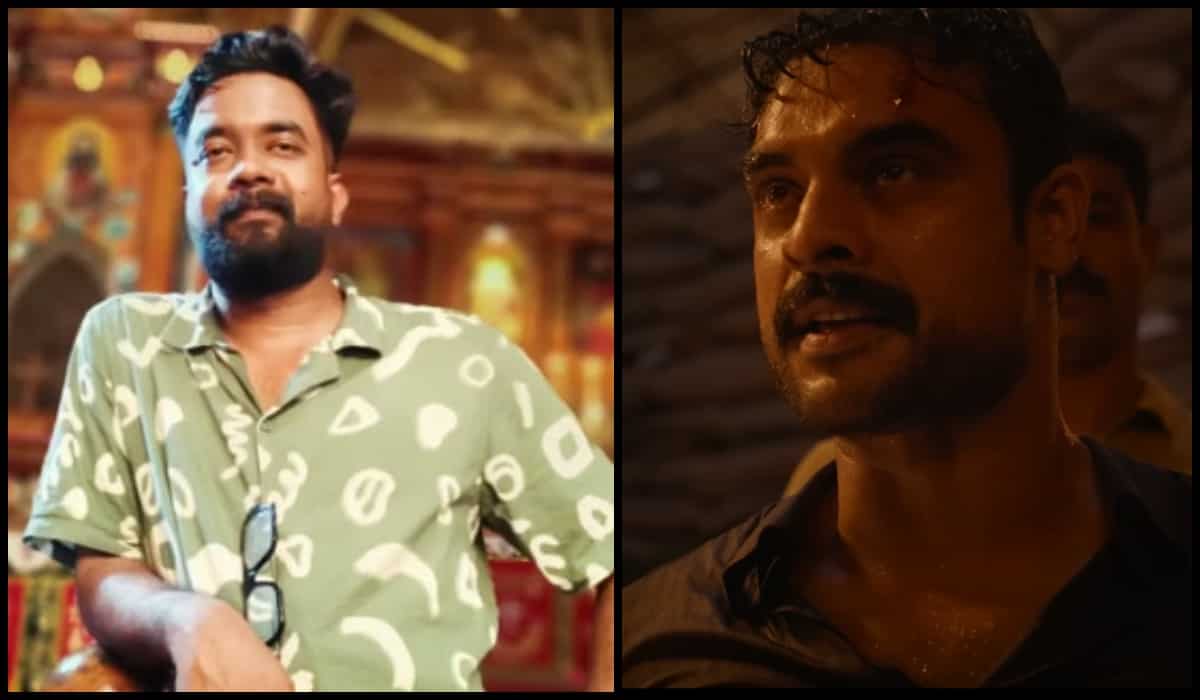
Joseph is a well-known writer who has received numerous accolades for his short stories. However, his screenwriting debut for the 2025 Malayalam film Narivetta, which starred Tovino Thomas, is what made him famous and gave him widespread acclaim. Abin Joseph discusses the difficulties of writing for the big screen, selecting Muthanga stir as the setting for Narivetta, working with director Anuraj Manohar, the film's effects, and other topics in an exclusive OTTplay interview.

As a published author, how did you get into movies?

Anuraj and I are from the same area, which is close to Iritty in the Kannur district, so I've known him for a long time. I was a short story writer at the time, and he gave me a call when he chose to try his hand at directing a movie for the first time. I wasn't giving the notion of working in movies much consideration at the time. I worked in a nice everyday position. He reached out to me again later, during the initial Covid wave, when one of my pieces was published in the Malayala Manorama weekly Onam special, and we made the decision to collaborate on a project.

Being a book writer is quite different from writing for the big screen. What was the greatest difficulty you had while writing for a movie?

I have written four or five screenplays for movies before, but Narivetta is my debut. As it is, the screenplay's medium isn't hard to understand. The act of writing itself is difficult, whether it's writing a screenplay, a short tale, or even texting someone. The other person should comprehend what we're saying; that's also the case with writing. Regardless of what is being written, that is difficult. You may leave a lot to the reader's imagination in short story writing. However, people connect to it visually in movies. As a result, the writing style itself is distinct, and individuals should be able to move between visuals. The writer's job is to supply "what to shoot," while the director and performers concentrate on "how to shoot" and "what to deliver."

This first film script has put you on the map, though you have won prestigious awards like the Yuva Puraskar by Sahitya Akademi for your short stories?

I am well-known in literary circles. However, film is clearly a more well-liked medium. In the first few days, there was this question of what the reaction would be and how people would receive it. I stopped thinking about the movie after seeing that it was doing well.

Why did you choose the Muthanga incident as the inspiration for Narivetta?

To begin with, I concentrated on the persona of Varghese (portrayed by Tovino Thomas), who is both ambitious and selective, a potentially lethal combination. One of the most challenging professions is being a police officer, especially in Kerala. Thus, someone who does not want to be a police officer finds themselves in that position and in a crisis. First thought of the usual crime/mystery investigation thriller. I then considered relating it to an actual event from the recent past. The Muthanga incident was the first one that sprang to mind. However, since it's a sensitive issue that is a part of our history, it's wrong to just accept it as it is. Therefore, I wrote the story to be reminiscent of or resemble the event.

How did you build your world for Narivetta, the research into the communities or the actual incident?

Keezhpally, my hometown, is close to the Aralam Wildlife Sanctuary in Kerala. I've been to tribal villages that resemble Muthanga. I know everything about their life, including the period before the government got involved and the communities were established, the time when it was happening, and the time after that. Knowing their everyday lives made building that world easy. Sufficient facts that may be utilized in a movie, but not in great detail. Additionally, the majority of the tribal members in the movie were portrayed by the indigenous population, who also helped in properly delivering the lines and constructing their homes. I can't teach you how to pronounce their slang, and I can't write the dialogues in it either. They also provided assistance with these and with things like the construction of their huts in the art area.

The story ends with Raghuram, Cheran's character, being portrayed as the antagonist. However, did he not just carry out orders and belong to the system?

Even Cheran's character is telling Varghese that you would have acted the same way if you had been in my situation. The antagonist is the system. And the system is never carried out by a single person but by those who represent and carry out the system. I think we should accept it that way and only that way.

Narivetta is a sensitive subject and hardly has any commercial elements but for the Minalavala song. But still the social-political thriller ran for housefull shows.

From the start, we understood that a film of this gravity would need a large budget. With the goal of making the screenplay as captivating as possible for the audience, we wrote it. We may infer that it was genuinely engaging from the success. Furthermore, it has been a while since a movie in the political action drama/thriller genre came out. There were such well-liked movies earlier, like in the 1980s and 1990s. Thus, it's possible that a film will be well received if it belongs to a certain genre after a significant period of time. As a result, we were also counting on the novelty element. However, our primary goal was to tell the story truthfully.

The incident that occurred 22 years ago has been brought back into the public eye by the movie, even if it doesn't specifically address the Muthanga controversy.

Because then we would have to portray it accurately, do justice to the politics of the times, and a number of other considerations, we cannot claim that a film is based solely on the Muthanga event. Therefore, we are only able to provide a few clues that might lead one to believe it to be that occurrence. As far as I'm concerned, if that event is ever brought up again, it signifies that the movie's politics has been successful, even though that wasn't the goal. It's a big deal, right? Following the commotion at Muthanga, there were a couple of tribal protests. Except for that, mainstream media has not covered tribal concerns as extensively over the past ten years. In my opinion, one of the benefits is that the media had to highlight the hardships of people's lives. Second, the Muthanga incident occurred in 2003, and with that kind of history, we produced the movie in 2025. Therefore, those who were born in the early 2000s are not the target demographic, and to be honest, they are not particularly informed about the event. I discovered that a lot of youngsters have either Googled the event or brought it up with their parents. I consider it to be a beneficial effect.

This film has a strong message, on being the voice for the marginalized. Do you believe films need to convey a message?

We did not plan on giving out a message. If people can read it from the film, let them. At the end of the day, we are all story-tellers. We are telling a fairly good story in a decent way. After that just give it up to the audience and keep quiet! (laughs)

Upcoming projects?

One of my novellas is being adapted to a film, which Anuraj is directing. Discussions are just happening for the rest of the projects.
Read Also: Ram Gopal Varma’s Saree Scores Big Viewership on OTT Despite Poor Theatrical Run
Get the latest Bollywood entertainment news, trending celebrity news, latest celebrity news, new movie reviews, latest entertainment news, latest Bollywood news, and Bollywood celebrity fashion & style updates!

HOW DID YOU LIKE THIS ARTICLE? CHOOSE YOUR EMOTICON!
#