



Kankhajura’s Trinetra Haldar on Trans Representation: ‘One Filmmaker’s Effort Doesn’t Signal Industry Readiness’ | Exclusive
6 months ago | 5 Views
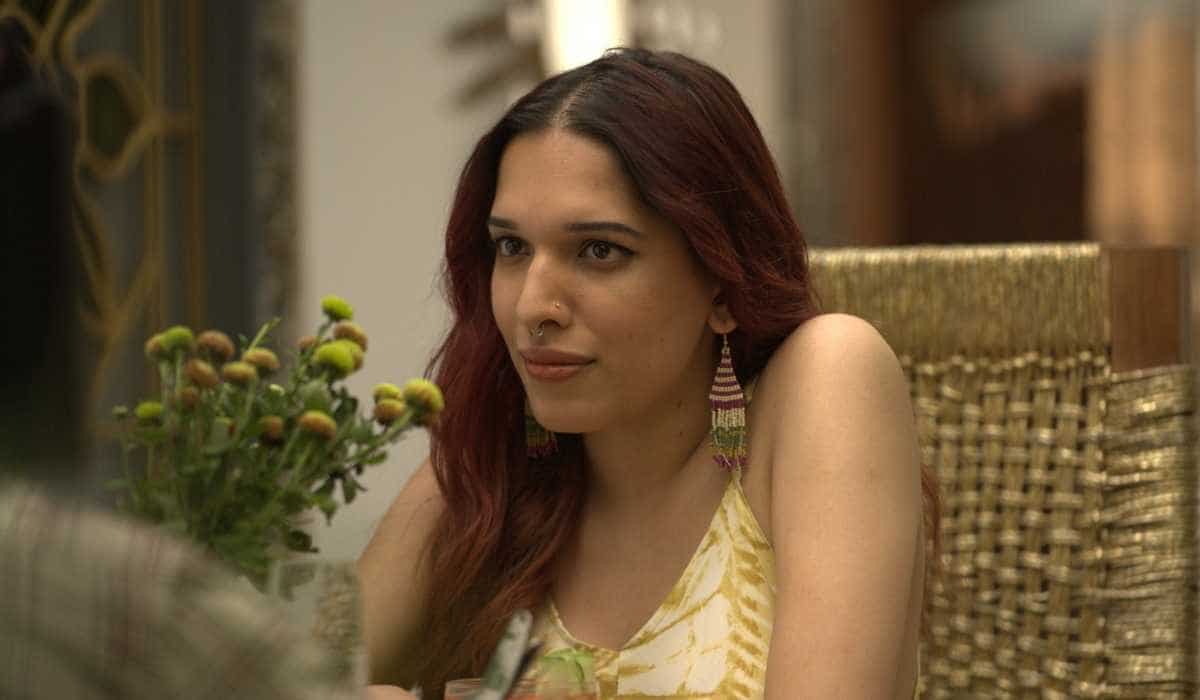
After her outstanding performance in Made in Heaven and her role in Rainbow Rishta, Trinetra Haldar returns with Kankhajura, a dark psychological thriller that is now available on Sony LIV (OTTplay Premium). This Chandan Arora-directed series, which examines strange silences and enigmatic motives using rural Goa as an unlikely backdrop, is an adaptation of the foreign series Magpie. In this exclusive interview with OTTplay, Trinetra talks about her transition from Meher to Aimee, how the environment influenced her, and the difficulties of portraying a character who is both very sensitive and well-balanced. Trinetra explores the art of portraying trauma on film, examining the obstacles that authentic trans narrative confronts in India's entertainment sector and how her connection to personal storytelling has evolved during her acting career.
Your contribution to Made in Heaven, which was based on complicated social and emotional issues, was essential. How did that environment evolve into a psychological thriller like Kankhajura?
It would be dishonest for me to say that I was working on twenty different projects following Made in Heaven since I wasn't. Immediately after Made in Heaven, Rainbow Rishta took place, but after it was released, I saw clearly that our business still has a long way to go. It doesn't follow that the sector is always prepared for more trans representation, even if Zoya Akhtar or only one director has accomplished something.
But a few months after the publication of Made in Heaven and Rainbow Rishta, Mukesh Chhabra sir's agency contacted me about this role, and I was intrigued by the script. I was captivated because, as actors, we aspire to perform a wide variety of roles. You wish to portray characters that are quite different from one another. You want to try out various genres. As a result, I was astounded by the show's premise, the environment in which it takes place, and the manner in which it has been adapted from the worldwide edition of Magpie. I was thinking that I had to be a part of this because it's not every day that trans people get the chance to play such well-developed and layered characters, especially one with an emotional spectrum that is completely different from what you've played before, and one with experiences and realities that are very different from, say, a Meher in Made in Heaven. The reason I accepted it was that it was so unique to me.
Goa in Kankhajura has a spooky tranquility that contrasts its typical image. In what ways did shooting in that location have an impact on your performance or emotional bond with the narrative?
Given that this is not set in upscale Goa, I am 100% sure of it. This is not similar to Assagao, right? I mean, this is set in rural Goa, which is where we are filming, and Aimee is undoubtedly a member of that community as well. Therefore, in my opinion, it truly gave me the chance to break free from who I am in reality. It enabled me to shed all of these layers of being refined, as someone who speaks, moves, and acts in a specific manner. Unfortunately, it requires a specific demeanor in Bollywood, entertainment, or even in real life as a doctor, among other professions. However, Goa undoubtedly had a role in peeling off all those layers.
I was able to be entirely myself in a way that is not Trinetra and is very Aimee—because you will hardly ever hear her speak English, and she speaks with a lot of confidence in, "Kya kar raha hai tu? Pagal ho gaya hai?" Like she's got this sort of sense of ease and freedom in the way that she interacts with people. Whether it's Ashu or Roshan's (Mathew) character or other individuals, I believe Goa certainly played a role, but it was also the people and the environment in which she lives. It was simple for me to integrate into Chandan (Arora)'s world, which I believe was created by the universe alone.
Prior to joining the adaptation, did you know the original series Magpie?
I actually watched the show before agreeing to join it, although I wasn't aware of it. I simply wanted to reiterate that the Indian version is not in any way copying the international version. The adaptation is quite original and beautiful, particularly for Aimee and my character, who is significantly different from her foreign counterpart. I watched the program in order to gain a better understanding of the connection between Ashu and Aimee, rather than attempting to replicate it in any manner. What is their equation? How close are they?
Moreover, trans folks are quite diverse, right? We are not all the same shade or hue; even trans people span a wide spectrum, right? People come from all sorts of careers. I also wanted to be a little more specific about which segment of the community I represent. Am I portraying a member of the Kinnar community? Am I not? Thus, what is our course of action? As a result, I wanted to see the foreign edition, and then Chandan and I were able to determine where Amy fits in.
Micro-expressions, silence, and stillness are frequently used in thrillers. Did you find that difficult as a performer? In the process, did you learn anything new about your trade?
Frankly, not at all. With Made in Heaven, in my opinion, Meher's character was excessively ambitious, privileged, and unlike the lives of many trans folks. Yes, of course, Meher experienced hardships and problems in her life, but in this setting, I think we see the reality of many trans people's lives more clearly. You will see in the show how we confront partner violence, how there is physical abuse, how there are other things—and not only in a way that portrays someone as a victim, but what it does to a person psychologically.
Because it's a crime thriller and a psychological thriller, I believe we get to see the mindsets of all these characters quite intimately and examine what that entails. Here I really got to do that, even though I don't believe I did it much on Made in Heaven. As a result, that experience was really rewarding for me as an actor. Discovering layers that humans experience outside of their transness was a really creative experience.
In fact, that made me feel really feminine—to imagine myself in the role of a character who is both experiencing domestic abuse and being targeted by the protagonist of the series, who is attempting to control her in order to get information while simultaneously attempting to rescue her from this terrible relationship. Therefore, Aimee is being utilized in a lot of ways, and the way that it affected her personality and broke her was... it's unfortunate to see, but it was a really fascinating experience for me to portray as a character.
The line between reliving and portraying trauma is frequently blurred. How do you define that limit for yourself?
It's all a matter of your profession, in my opinion. Some performers believe that it works for them to dig up and expose their past traumas. However, I think that it is unsustainable to continue to focus on your own trauma, extract it, and use that emotional memory in my process, which may be novel to me. Things like violence, sexual abuse, and domestic violence may work with it, and certain feelings may work with it, but in my opinion, it's not healthy to draw from that emotional trauma in these situations.
I learned how to approach it differently from Helena Walsh, a truly outstanding acting instructor I worked with. In fact, I collaborated with two acting instructors: Puja Swaroop, a superb theater performer, and Helena Walsh, who is located in the United Kingdom. Her whole outlook is that acting is a profession. Ultimately, acting involves some level of deception. Yes, there is truth there, but you are also creating trauma rather than reliving it. The craft of an actor is recreating it with instruments such as your voice, breath, body, and tone of speech. An actor's job is that.
You must be subject to regulations. In order to be able to use those tools and conjure that kind of magic, your nervous system must be regulated. Otherwise, it's like calling someone a good performer just because you slapped them and placed a camera in front of them. Not always. They were injured, but that doesn't imply that they are talented performers. Performance is not about that. Recreation, not just reliving, is what performance is all about.
As a result, I believe that I have acquired strategies throughout time for doing so, and I am still learning new ones. And I'm really appreciative of the chance this show gave me to learn about some of those resources.
"Telling your own story before others tell it for you" is something you've discussed. Has acting given you greater control over your own story? Or has it made it more complicated?
What I find is that my transition ended a long time ago when it comes to discussing my personal story. My most recent surgery, which took place more than a year ago, marked the conclusion of my treatment, I believe. I've reached a stage in my life where I'm more interested in discussing a variety of transgender narratives than just my own.
What's amazing about performing and entertainment is that we can accomplish that via fiction. There are so many aspects of my personal life—for instance, my romantic relationships—that I can't discuss on my platform or anywhere else. Through the use of different fictional characters, though, I can discuss those events. In my opinion, it's a really lovely place to be.
Right? Entertainment gives us work that allows us to see various versions of ourselves. As a trans actor and someone dedicated to sharing trans stories, that is what I am determined to accomplish.
Get the latest Bollywood entertainment news, trending celebrity news, latest celebrity news, new movie reviews, latest entertainment news, latest Bollywood news, and Bollywood celebrity fashion & style updates!
HOW DID YOU LIKE THIS ARTICLE? CHOOSE YOUR EMOTICON!
#