







Rare Earth Magnet Shortage Sparks Panic in Indian Auto Sector: Challenges and Future Solutions
5 months ago | 5 Views
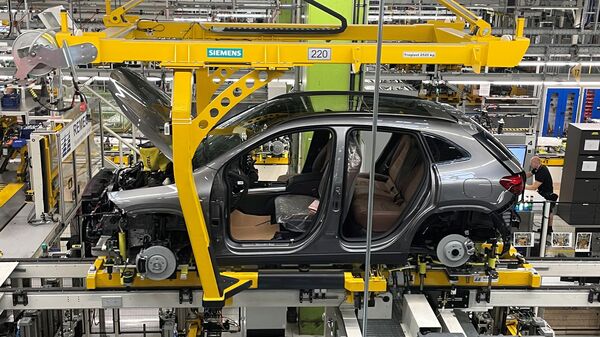
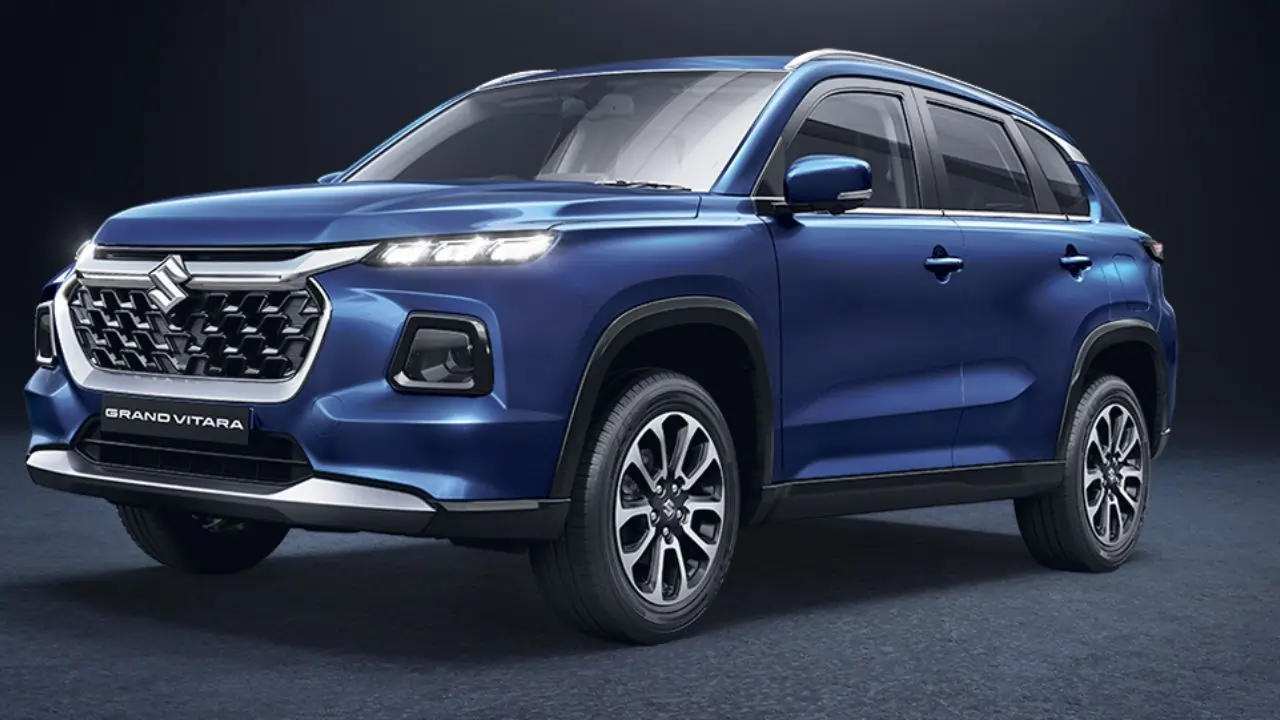
Despite India's vast reserves, China's restrictions on rare earth exports have disrupted the Indian car industry. As the industry worries that this catastrophe will soon have an impact on the manufacturing of vehicles, particularly the electric vehicle sector, which is one of the expanding areas of the industry, the stakeholders in the automobile industry have begun to lobby the Indian government to address the problem.
Because of the interruption in the supply chain for rare earth magnets, the industry participants are concerned that the manufacture of the cars will be negatively impacted in the near future. The segment where cars are equipped with a wide array of features is likely to be affected. In the past, the worldwide automotive sector experienced significant disruption during the COVID-19 epidemic because of semiconductor chips, which had a lasting impact on the industry, its output, and its deliveries.
The industry is concerned about the possibility of another similar interruption to the present rare earth magnet supply chain. Recycling, alternative magnets, and diplomacy are a few of the short-term steps that are being proposed to lessen the impact of this. However, there are strong opinions on developing a self-sufficient supply chain, which is essential for the industry's long-term stability.
The Rare Earth Magnet Crisis: What Are Its Impacts?
As part of its trade war with the United States, the Chinese government unexpectedly ceased all rare earth magnet exports to all nations on April 4 of this year. Like much of the world, India discovered itself caught in the crossfire of China's export restrictions, and the Indian domestic automobile industry is now in a state of panic. Industry organizations, component manufacturers, and a number of automobile companies have all voiced concerns about this matter. The Indian auto industry's production would be severely impacted if this situation persists, according to major players in the sector. The crisis would have the greatest impact on vehicles that are packed with features, which corresponds to the top models.
The scarcity of rare earth magnets: What cause should India be concerned?
China is now responsible for 90% of the world's manufacturing of rare earth magnets. In contrast, India relies entirely on imports for the majority of its most vital minerals, such lithium, nickel, cobalt, and germanium. In recent years, copper imports—which is another essential component for high-tech industries like automobiles—have increased tenfold in the past ten years, while domestic output has decreased. Due to increasing EV volumes across all segments, India imported about 460 tonnes of rare-earth magnets in FY24, with forecasts of 700 tonnes in FY25.
If anybody wants to export samarium, gadolinium, terbium, dysprosium, lutetium, scandium, or yttrium, they will now need a specific license from the Chinese government due to the most recent restrictions on the export of rare earth magnets. Of these seven elements, dysprosium and terbium are particularly important to the automotive and defense industries, where they are used to produce potent magnets that are essential for sophisticated technology and vehicle parts. Rare earth elements are essential to both conventional and electric automobiles since they provide power for everything from motors and e-axles to sensors and ignition systems.
In the past few weeks, Beijing has denied several requests for licenses for the rare earth magnets. For this reason, the Indian auto industry is in a state of flux as a result of China's recent export restrictions, which, if maintained, may cause a complete catastrophe for the sector.
The Rare Earth Magnet Crisis: A Tough Headwind Ahead
Following the semiconductor scarcity, the COVID-19 problem, and the supply chain disruption in the recent past, the Indian mobility sector, like the remainder of the worldwide mobility industry, is on the verge of another catastrophe. It has been over two months since the industry has received any shipments of rare earth elements, with the consignments ceased in April. According to Puneet Gupta, Director of the Indian Automotive Market at S&P Global Mobility, if this situation persists, the industry will be on course for a shutdown by July or, in some instances, by August 2025. Gupta thinks that OEMs with big volumes and models with more features will be more likely to see a production halt.
Nilesh Bajaj, the CEO of Vayve Mobility, the EV startup that won over the crowds at the 2025 Bharat Mobility Global Expo with the Vayve Eva electric car, expressed the same sentiment. Speaking to HT Auto, he stated that recent export limits imposed by China have caused a severe bottleneck, particularly for electric vehicles that use Permanent Magnet Synchronous Motors (PMSMs), which make up over 70% of the motor architectures for electric vehicles in India. "Each electric car requires approximately 1.5–2 kg of NdFeB magnets, and two-wheelers, while lighter, are still reliant on compact PMSM-based drive systems," he said, adding that "without urgent resolution, vehicle assembly lines could face interruptions as early as Q3 2025, particularly for high-volume electric models." His remark is consistent with concerns previously voiced by Bajaj Auto and other top OEMs about the declining availability of magnets and the genuine possibility of production interruptions.
The rare earth magnet issue: What positive aspects can be found?
The Society of Indian Automobile Manufacturers (SIAM) has already contacted the Indian government to request diplomatic intervention and approval for the rare earth elements. Industry analysts have cautioned that this strategy can only postpone the inevitable, leaving the fundamental problem of supply chain fragility for essential parts unsolved, even if it may provide temporary relief.
India has the fifth-largest reserves of rare earth elements in the world, thus many experts have argued for the necessity of building a strong domestic magnet supply chain. It's important to remember, though, that India's rare earth industry has been mostly controlled by a single firm, India Rare Earths Limited (IREL), and that the nation now lacks the capacity to manufacture rare earth materials in the amounts necessary to support the industry's requirements. The establishment of the national magnet supply chain is a clear, albeit complicated and lengthy process, but there have been ideas to take into account substitutes like ferrite magnets. Increasing the recycling of rare earth materials, such as extracting magnets from end-of-life electric vehicles, is another promising way to help fill the gap while domestic manufacturing capacity is being developed.
In this regard, Gupta stated that in the near future, the forward strategy would focus on utilizing diplomatic channels and investigating other sources for sub-assemblies. “Over the long term, the government is actively pursuing initiatives to process and extract rare earth elements (REEs) domestically, aiming to reduce external dependence. Nevertheless, it must be acknowledged that the world will continue to be interdependent. A country cannot achieve complete self-sufficiency unless it is prepared to make significant investments in recreating the current resource ecosystem, he continued.
The same notion was reflected by Bajaj. According to him, India's future direction must emphasize both innovation and self-sufficiency. He emphasized four key strategies: diversifying motor architecture, shortening validation cycles, investing in domestic value chains, and promoting deep-tech businesses. "We must treat this incident as a wake-up call, with the goal of building long-term resilience and technological leadership in EV manufacturing," the CEO of Vayve Mobility stated.
Read Also: Next-Gen Kia Seltos Spied Testing With Dual Front Designs—Is an EV Variant on the Way?
Get the latest Bollywood entertainment news, trending celebrity news, latest celebrity news, new movie reviews, latest entertainment news, latest Bollywood news, and Bollywood celebrity fashion & style updates!
HOW DID YOU LIKE THIS ARTICLE? CHOOSE YOUR EMOTICON!
#