Maruti Suzuki India eyes 4 lakh exports in FY26 to counter domestic market slowdown
8 months ago | 5 Views
With a growth rate of 20% year over year, Maruti Suzuki India Limited (MSIL) aims to export four lakh units in the current fiscal year (FY26). In this way, the automaker hopes to increase its share of the export market from its current 43% to 50%. The business emphasized that the aggressive drive is a strategic necessity and is intended to mitigate risks associated with its business strategy and provide protection against possible swings in the local market. The approach is already paying off, with exports becoming a solid engine of growth in the face of a somewhat lackluster local economy.
The automaker's export performance has been exceptionally good in recent months. Maruti Suzuki's exports increased by 80% year over year in May 2025 alone. In the meantime, the automaker's exports increased by 50% when looking at the combined performance for April and May. This strong export campaign, according to Rahul Bharti, Executive Director, Corporate Affairs at Maruti Suzuki India, has been essential in counteracting a somewhat weaker domestic wholesale market, allowing the company to report an overall sales growth of 3.2% in May and 5% for the April-May period, including exports.
The varied export strategy of Maruti Suzuki covers a large geographic area and guarantees flexibility in the face of fluctuating global economic conditions. The business has a presence in around 100 nations throughout the globe. Africa, Latin America, and Southeast Asia are among the major markets that make a substantial contribution to its export volumes. Notably, Japan has quickly ascended to the second position as a destination for Maruti's exports, demonstrating the popularity of particular models there.
Mexico, Saudi Arabia, and Chile are additional important markets. The Fronx, Baleno, Swift, Dzire, and Jimny are among the top five Maruti export vehicles that stand out. In new markets like Japan, the Fronx and Jimny have been especially effective at generating incremental volume.
Returning to compact cars for the sake of the entire industry's expansion
Maruti Suzuki is closely monitoring the trends in the Indian market, even though exports are a key growth buffer. The wholesale data for MSIL in the domestic market in May was 1,35,962 units, which is consistent with an industry in which wholesale sales remained unchanged at about 3,51,000 units.
Partho Banerjee, Senior Executive Officer, Marketing and Sales, Maruti Suzuki India Limited, said that factoring out new model introductions from the previous year's base reveals an underlying 8% degrowth in wholesale figures. Retail sales, as indicated by 'Vahan' data, also showed a degrowth of around 4% for both MSIL and the industry in May, signaling a slowing market despite the presence of new models, he added.
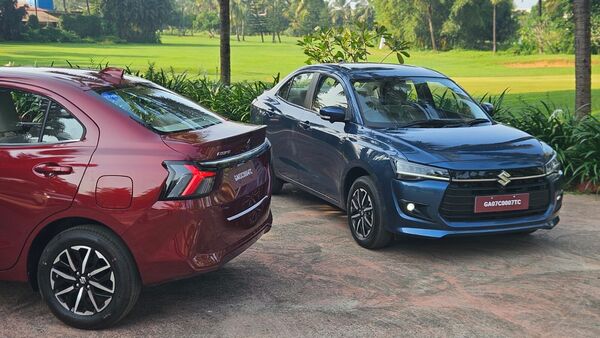
In May 2025, the Maruti Suzuki Dzire continued to be one of the top-selling models.There are a number of causes for this low level of domestic demand. However, as MSIL has emphasized, the major problem behind this is the rising cost of compact vehicles, mostly as a result of growing regulatory compliance costs. The rising cost of small vehicles is thought to be due in large part to regulatory reasons, which makes affordability a significant issue for consumers wishing to switch from two-wheelers to four-wheelers. As finance becomes more challenging for many potential purchasers, this has an impact on the entry-level sector, where sales have been poor notwithstanding steady levels of demand. The proportion of this market has been steadily decreasing, and it's possible that some clients are choosing used cars. Additional major causes of de-growthIn addition to these economic constraints, the recent conflict between India and Pakistan has given rise to unique regional issues. In Jammu & Kashmir, Punjab, Rajasthan, and Gujarat, Maruti Suzuki has observed a clear impact from military operations in the border regions. These states, where MSIL dominates with a market share of more than 55% and together account for almost 22% of its total sales, have been impacted directly. The scenario has resulted in considerable upheaval, and several reservations have been canceled. The fall in tourist foot traffic in these cities, which rely on tourism, has exacerbated the decline in sales. Despite the fact that urban market sentiments are not particularly optimistic, the expected favorable monsoon is expected to boost rural demand, which currently accounts for about half of MSIL's sales. The discussion over hybrid taxationThe taxation of strong hybrid electric vehicles (sHEVs) in India has also been a source of concern for Maruti Suzuki. The firm claims that it is unjust for hybrid vehicles with high performance to be subject to the same tax rate as vehicles powered by pure gasoline or diesel. According to MSIL, hybrids are a greener technology that may take the place of conventional petrol and diesel automobiles. But Bharti pointed out that because hybrids have a "viability gap," they "cannot be taxed equal to pure petrol and diesel" if they are taxed the same way as pure ICE cars. MSIL believes that hybrids, as a cleaner alternative, merit a better tax system as long as pure petrol and diesel cars are sold, emphasizing that the economic viability is problematic due to GST and state taxes. The firm argues that hybrid vehicles "need a treatment" that is distinct from traditional automobiles. Prioritizing safety: Addressing perceptionsAdditionally, Maruti Suzuki is making a concerted effort to dispel the widely held belief that its vehicles are unsafe. With its 'Arena Safety Shield' campaign, the firm has emphasized that its entry-level vehicles, such as the WagonR, now come standard with six airbags across all variations, as well as the Electronic Stability Program (ESP) in the LCV sector. However, the business has also stated that it intends to add six airbags on a few additional models, such the Maruti Suzuki Baleno and the Ertiga, over the following two to three months. In order to dispel outdated misconceptions about Maruti cars, this holistic approach to safety, which will soon include six airbags as standard in 97% of its models, seeks to teach consumers that Maruti Suzuki vehicles are "much, much better" than they believe.











.webp)