









Honda Cars India Doubles Down on EVs and Hybrids Despite Global Realignments
5 months ago | 5 Views
While its Indian arm is laying out a calm, level-headed route to 2030, Honda Motor is perfecting its clean mobility approach worldwide, with a renewed focus on hybrids as well as electric vehicles. Honda Cars India Ltd. (HCIL) has a clear objective: to transition to cleaner fuels. The roadmap is realistic—a good mix of gasoline, hybrid, and battery electric powertrains.
Kunal Behl, Vice President of Marketing & Sales at Honda Cars India, stated in a recent conversation with HT Auto that the company's pledges in India are steadfastly on course, despite changing global priorities. "We always intended a phased transition, beginning with the phasing out of diesel, followed by the introduction of robust hybrids, and now preparing for a complete EV deployment," he continued.
local anchors, global winds
As manufacturers struggle with raw material costs, charging infrastructure shortages, and demand swings, the worldwide narrative may be shifting between hybrid and battery electric versions. However, for HCIL, the way ahead is still based on consistency. Previously, the Elevate-based EV initiative was unveiled; now, it is turning into a separate SUV that is over four meters long and scheduled to be released in FY26. This will be Honda's initial entry into the electric vehicle market in India.
Realism is the basis for this multifaceted strategy. As Behl noted, "Customer preference depends on convenience—charging station availability, taxation benefits, and daily usage patterns." An electric vehicle makes sense in metro areas with a good charging infrastructure. In other places, hybrids are still a sensible option. He stated, "Our goal is to provide three clear options—petrol, hybrid, and electric—so that every customer can discover what suits their lifestyle best."
More Powerful Legacies, Stronger Hybrids
Naturally, Honda is no stranger to hybrids. The Japanese automaker was one of the first to preach about this technology in India, starting with the Civic and Accord and continuing with the current City e:HEV. "We've seen hybrid sales account for up to 30% in markets like Uttar Pradesh, where tax benefits are similar to BEVs," says Behl. Strong hybrids make up about 11% of sales countrywide.
Also watch: Honda City e:HEV Hybrid: First Drive Review
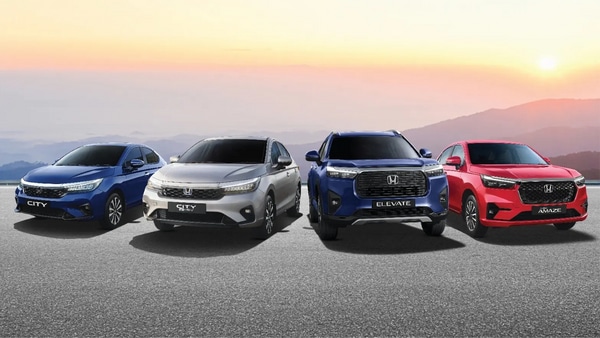
Going forward, Honda plans to broaden its hybrid offerings beyond sedans. The larger SUV strategy—five models by 2030—is already in motion. The Elevate was the first, the upcoming EV SUV is the second, while details of the next three remain under wraps for now. However, it is anticipated that the upcoming three SUVs will feature either an electric or a hybrid powertrain.
CNG: An opportunistic play, not a strategic pivot
Interestingly, Honda has also dipped a cautious toe into the CNG pool—albeit through third-party retrofitted kits. Starting with the Amaze and now extended to the Elevate, the move seems more reactive than strategic. “The response to the retrofit kits has been good in specific markets," Behl admits, “but this isn't a long-term powertrain direction for us."
Unlike rivals who have factory-fitted CNG models as portfolio mainstays, Honda is resisting that detour. “Factory-fit CNG requires a shift in production strategy. Our focus right now is on launching our battery-electric vehicle on time. We don’t want to lose sight of that," he added. The message is clear- while CNG may offer incremental sales in select regions, it’s not part of Honda’s clean-fuel blueprint.
Kunal Behl, Vice President, Marketing & Sales at Honda Cars India, has stated that the company is on course to move towards cleaner fuel with a balanced mix of hybrids, EVs, and petrol models CBUs: Low volume, high valueCompletely built units (CBUs) are also part of the larger equation—but here again, Honda is realistic. These imported models aren’t about sales volumes. They serve a different purpose, explained Behl. “CBUs showcase our global technology and premium brand value to Indian consumers." From earlier imports like the Honda Accord Hybrid to potential future launches, Honda’s CBU strategy is brand-led. However, India’s steep import duties remain a deterrent. “The current taxation structure makes CBUs aspirational, not accessible," Behl noted. Still, they play a crucial role in positioning—offering a halo effect that supports the brand's premium aspirations. Exports: Strategic, not centralIf there’s one model that has quietly expanded Honda Cars India’s global footprint, it’s the Honda Elevate. Developed primarily for the domestic market, it has unexpectedly found appeal in international territories—Japan, Latin America, and, more recently, select Caribbean nations. “Our core idea has always been ‘local production for local consumption’. But when a product performs well at home and fits the needs of international markets, it makes sense to extend its reach," Bhel explained. That’s precisely what Elevate has enabled. Built at Honda’s Tapukara facility in Rajasthan, the SUV now anchors the brand’s growing export portfolio. However, Behl is careful to set expectations. “Export is a valuable piece of the business puzzle—it improves the overall business constitution—but it remains supplementary. Our core focus is still the domestic market." This approach is deliberate. Honda isn’t chasing volumes abroad for the sake of boosting numbers. Instead, it’s strategically evaluating which India-developed products can find resonance globally. The success of Elevate may open the door for other SUVs in the upcoming five-model lineup to be considered for export, but not at the cost of Indian market prioritization. It’s encouraging, but not defining, Behl sums up. “We don’t design in India just for the world. We design for India—and if the world wants in, we welcome that." Growth Regions: Going deeper, not just widerAt the heart of Honda Cars India’s growth ambition lies a textbook yet tailored approach—Product, Price, Place, and Promotion. But it’s not strategy for strategy’s sake. It’s being used to reposition the brand within a more premium orbit. “In terms of place, we already have a footprint across 170 Tier-III towns with over 300 outlets," says Behl. Expansion is being driven by targeted market analysis, identifying towns and cities where Honda’s physical presence and after-sales infrastructure need bolstering. On the product front, the immediate focus is to fill the EV void. “That’s why we’re working aggressively to bring our battery electric vehicle in the next fiscal," Behl explained. Simultaneously, Honda has committed to rolling out five SUVs by 2030, with Elevate and the upcoming EV leading the charge. Pricing strategy, meanwhile, is aligned with delivering value through advanced safety features and technologies—without diluting brand equity. Promotion, too, has evolved. Rather than leaning solely on volume-focused campaigns, Honda is betting big on digital-first, consultative experiences. Its ‘Honda Expert Connect’—a live, one-on-one virtual showroom experience—underscores the company’s commitment to offering a premium customer journey even before a foot is set inside a dealership. This multi-pronged strategy is underpinned by a clear identity shift. “We discontinued some mass-market models because our intent is to be seen as a premium brand," Behl noted. That means not just refining the product lineup, but also elevating everything around it—from showroom ambience and digital tools to variant packaging and after-sales experience. The result- in models like Elevate and Amaze, a majority of buyers are now opting for ADAS-equipped top trims, validating Honda’s move up the value chain. Customers see value in safety and tech. That aligns perfectly with where we want the Honda brand to be, Behl explained. Looking aheadIn a sluggish passenger vehicle market where discounts and flashy launches often mask tepid consumer sentiment, Honda’s approach stands out for its restraint—and resilience. The company's strategy is neither aggressive nor defensive—it’s deliberate. Focus on hybrids and EVs continues. CNG is observed, not embraced. CBUs are leveraged for image, not impact. And exports are important, but domestic remains sacrosanct.