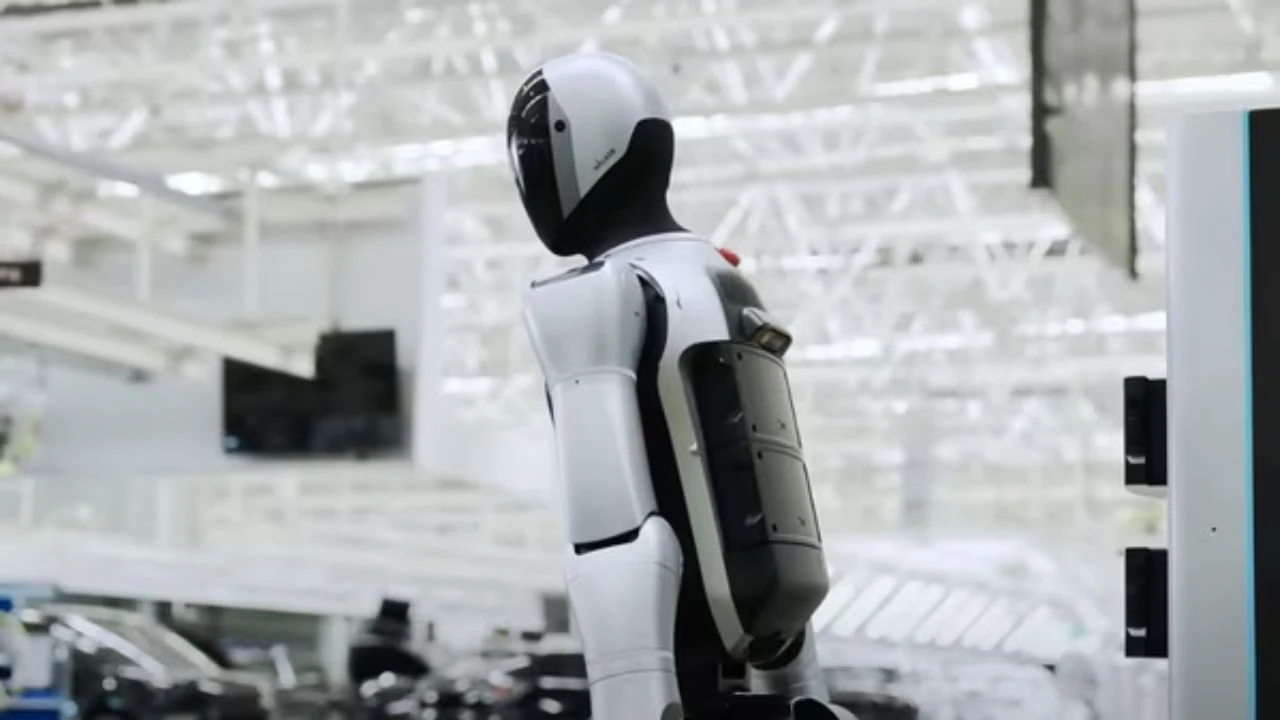
No Humans Needed! Watch This Robot Replace Its Own Battery and Get Back to Work in Seconds
7 months ago | 5 Views
In a world where automation is rapidly evolving, robots are becoming more self-sufficient than ever. The latest breakthrough? A robot that can replace its own battery without human intervention—saving time, reducing downtime, and boosting efficiency. Let’s explore how this innovation works and what it means for the future of automation.
How Self-Recharging Robots Work
Traditional robots often require manual battery swaps or charging stations, which can slow down operations. However, this new generation of robots is designed with built-in mechanisms to detect low power levels, locate a fresh battery, and perform a seamless swap—all in a matter of seconds.
Using advanced sensors and AI algorithms, the robot:
Monitors Battery Levels – Continuously checks power status to anticipate when a recharge is needed.
Navigates to a Charging Station or Battery Dock – Moves autonomously to the nearest battery swap station.
Executes the Swap – Uses robotic arms or magnetic connectors to remove the drained battery and insert a fully charged one.
Resumes Work Instantly – Returns to its task without delay, ensuring uninterrupted productivity.
This process eliminates the need for human intervention, making it ideal for 24/7 operations in warehouses, factories, and even hazardous environments.
Benefits of Autonomous Battery Replacement
1. Increased Productivity
With no downtime for manual charging, robots can work continuously, significantly improving output in industrial settings.
2. Cost Efficiency
Reducing reliance on human workers for maintenance cuts labor costs and minimizes errors.
3. Enhanced Safety
In high-risk areas like nuclear plants or deep-sea exploration, self-sufficient robots reduce human exposure to danger.
4. Scalability
Businesses can deploy multiple robots without worrying about battery management bottlenecks.
Real-World Applications
Manufacturing & Warehousing
Companies like Amazon and Tesla already use automated systems, but self-charging robots could take efficiency to the next level.
Healthcare & Service Industry
Hospital delivery bots or cleaning robots could operate non-stop, improving service reliability.
Space & Defense
NASA and military agencies could deploy these robots in remote or hostile environments where human access is limited.
The Future of Autonomous Robotics
As AI and robotics continue to advance, we can expect even more self-maintaining machines. Future developments may include:
Wireless Charging Integration – Eliminating the need for physical battery swaps.
Solar-Powered Robots – For sustainable, off-grid operations.
Swarm Robotics – Teams of robots working together with shared energy resources.
The ability of robots to replace their own batteries marks a significant leap toward full autonomy. By minimizing human intervention, businesses can achieve higher efficiency, lower costs, and safer operations. As this technology evolves, we’re moving closer to a future where robots handle not just tasks—but their own upkeep as well.
Would you trust a robot to manage its own power needs? The future is already here, and it’s working without a break!
Read Also: Gaming Mouse Manufacturer Secretly Installed Malware, Then Silently Removed It
Get the latest Bollywood entertainment news, trending celebrity news, latest celebrity news, new movie reviews, latest entertainment news, latest Bollywood news, and Bollywood celebrity fashion & style updates!
HOW DID YOU LIKE THIS ARTICLE? CHOOSE YOUR EMOTICON!
# Robot # Amazon # Tesla



.webp)