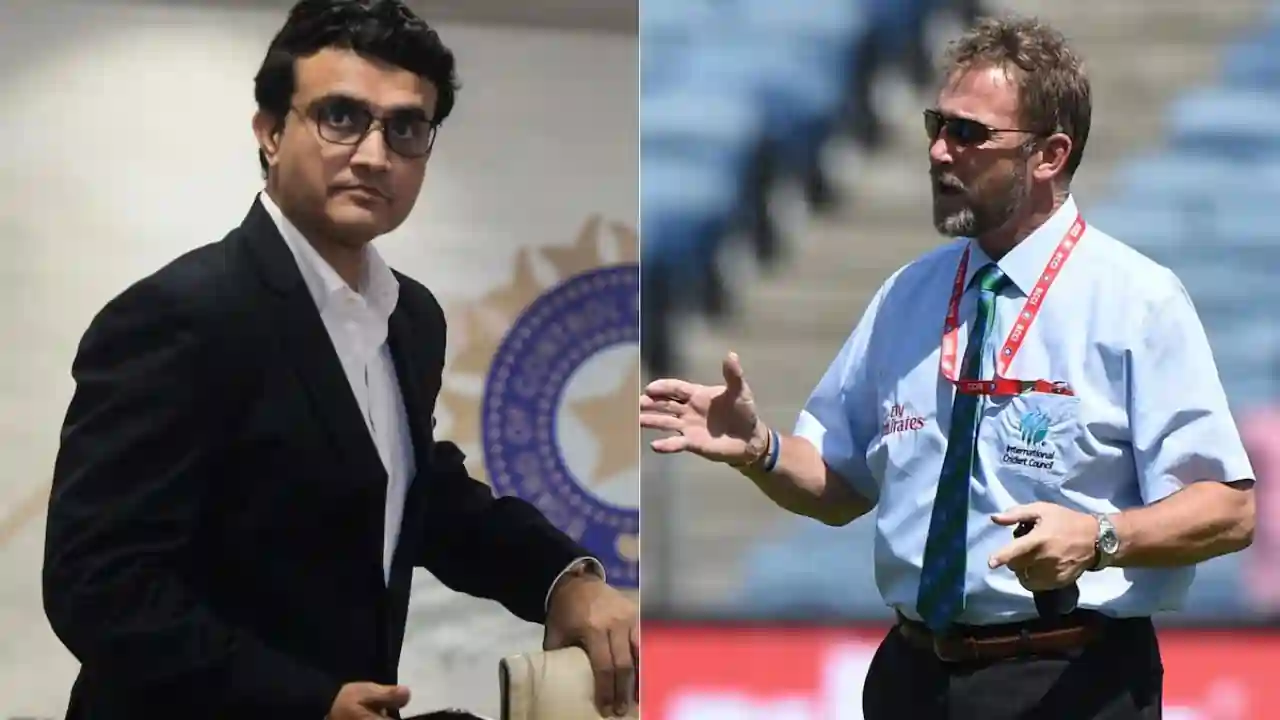
Cricket's Dark Side Exposed: Chris Broad Accuses BCCI of ICC Influence to Shield Ganguly's Team
4 months ago | 5 Views
In the high-stakes world of international cricket, where boundaries are drawn and rules enforced, a shocking revelation has ripped open old wounds. Former ICC match referee Chris Broad, a veteran of over two decades in the game's corridors of power, has come forward with explosive claims. He alleges that the mighty Board of Control for Cricket in India (BCCI) wielded political clout to soften penalties on the Indian team during Sourav Ganguly's captaincy. At the heart of it? Over-rate fines that were mysteriously diluted under pressure. This isn't just a footnote from the past—it's a stark reminder of how money and influence can bend the spirit of the sport.
A Reluctant Referee's Harrowing Tale
Chris Broad's journey from England's opening batsman to one of the ICC's most respected referees spanned 21 years, ending abruptly in 2024 when his contract wasn't renewed. Speaking candidly to The Telegraph, the 67-year-old father of cricket legend Stuart Broad didn't mince words. He painted a picture of an environment where integrity often took a backseat to politics. "I dodged a lot of bullets, both politically and physically," he reflected, referencing everything from the 2009 Lahore terror attack to the subtle arm-twisting behind closed doors.
Broad's tenure, starting in 2003, coincided with the BCCI's meteoric rise as cricket's financial powerhouse. But it was a specific incident in 2005 that still haunts him—one that thrust Ganguly, the charismatic "Tiger of Kolkata," into the spotlight.
The Over-Rate Saga: "Be Lenient, It's India"
Picture this: A pulsating ODI match in India, with the hosts trailing by three or four overs on the required rate. Under ICC rules, this warranted a fine to keep the game flowing. Broad, clipboard in hand, urged the Indian players to pick up the pace. Captain Ganguly, however, remained unfazed, ignoring the referee's repeated "hurry-ups."
As the innings wrapped, Broad prepared to dock the penalty. Then came the call—a hushed directive from higher up: "Be lenient, find some time because it's India." Stunned but compliant, Broad and his team "found" extra minutes, shaving just enough off the shortfall to evade the sanction. "Right, OK," he recalled wryly. "We had to bring it down below the threshold."
The leniency was short-lived. In the very next game, history repeated itself. Ganguly's side dawdled again, defying Broad's pleas. This time, with no wiggle room left, Broad sought guidance. The response? "Just do him." Politics had won the day, forcing a fine that felt more like a reluctant afterthought than true accountability.

These weren't isolated slips; Broad sees them as symptoms of a deeper malaise. The BCCI, flush with revenue from massive TV deals and sponsorships, held the ICC's purse strings. "It's a much more political position now than it ever has been," he lamented, hinting at how top ICC roles had become battlegrounds for influence.
Echoes from the Past: Chappell's Corroboration
Broad's bombshell didn't land in a vacuum. Former India coach Greg Chappell, no stranger to boardroom battles, echoed the sentiment. In the same interview wave, Chappell revealed how ex-BCCI president Jagmohan Dalmiya once offered to "organize" an early lift on Ganguly's ban—stemming from a separate fine Broad had imposed after a 2005 ODI against Pakistan. Dalmiya, a towering figure in Indian cricket, wanted Ganguly back for a Sri Lanka tour, underscoring the board's protective instincts.
Chappell, who coached India from 2005 to 2007 amid Ganguly's ouster and return, described a system where favoritism trumped fairness. "Powerful figures pulled strings," he implied, adding fuel to Broad's fire.
Broader Ramifications for Cricket's Governance
These allegations arrive at a tense moment. With Jay Shah, former BCCI secretary, now ICC chairman, whispers of Indian dominance grow louder. Broad's exit in 2024—after officiating his last Test in Colombo—feels symptomatic. He was "very happy to carry on," yet the door slammed shut, leaving him to wonder if his straight-talking ways clashed with the new order.
The BCCI and ICC have stayed mum, with Cricket Australia deferring queries to the global body. But the damage is done. Fans, already weary of slow overs plaguing T20s and Tests, now question if justice is truly blind—or blinded by billions.
A Call for Cleaner Play
Chris Broad's story isn't about settling scores; it's a plea for the game he loves. Cricket thrives on trust—between players, officials, and spectators. When giants like the BCCI cast long shadows, that trust erodes. As Broad put it, navigating "right and wrong" in such murky waters is a tightrope walk. For the sake of tomorrow's talents, perhaps it's time to drain the politics and let merit lead.
In an era where IPL glitz overshadows grassroots grit, revelations like these remind us: True champions win on the field, not in the shadows of influence. Will the ICC listen? Or will "it's India" become the unspoken rule?
Get the latest Bollywood entertainment news, trending celebrity news, latest celebrity news, new movie reviews, latest entertainment news, latest Bollywood news, and Bollywood celebrity fashion & style updates!
HOW DID YOU LIKE THIS ARTICLE? CHOOSE YOUR EMOTICON!
# Cricket # Chris # SouravGanguly



.webp)


.webp)