Where is the Line? Hardik Pandya’s Stand on Media Dignity and The Cost of Clicks
3 months ago | 5 Views
In the digital age, fame is often viewed as a commodity, and with it comes a harsh assumption: that a celebrity's life, and the lives of those around them, are unconditionally public property. This week, Indian cricketer Hardik Pandya forcefully challenged this notion after an incident involving paparazzi allegedly photographing his girlfriend, Mahieka Sharma, from an inappropriate and disrespectful angle at a Bandra restaurant.
Taking to his Instagram story, the all-rounder condemned the act as a clear breach of personal boundaries and a pursuit of "cheap sensationalism" over ethical journalism.
The Problem with Invasive Angles
The core of Hardik Pandya's complaint centered on the specific angle chosen by the photographers as Mahieka Sharma was walking down a staircase.
This goes beyond the usual frustration over being papped during a private dinner or a casual outing.
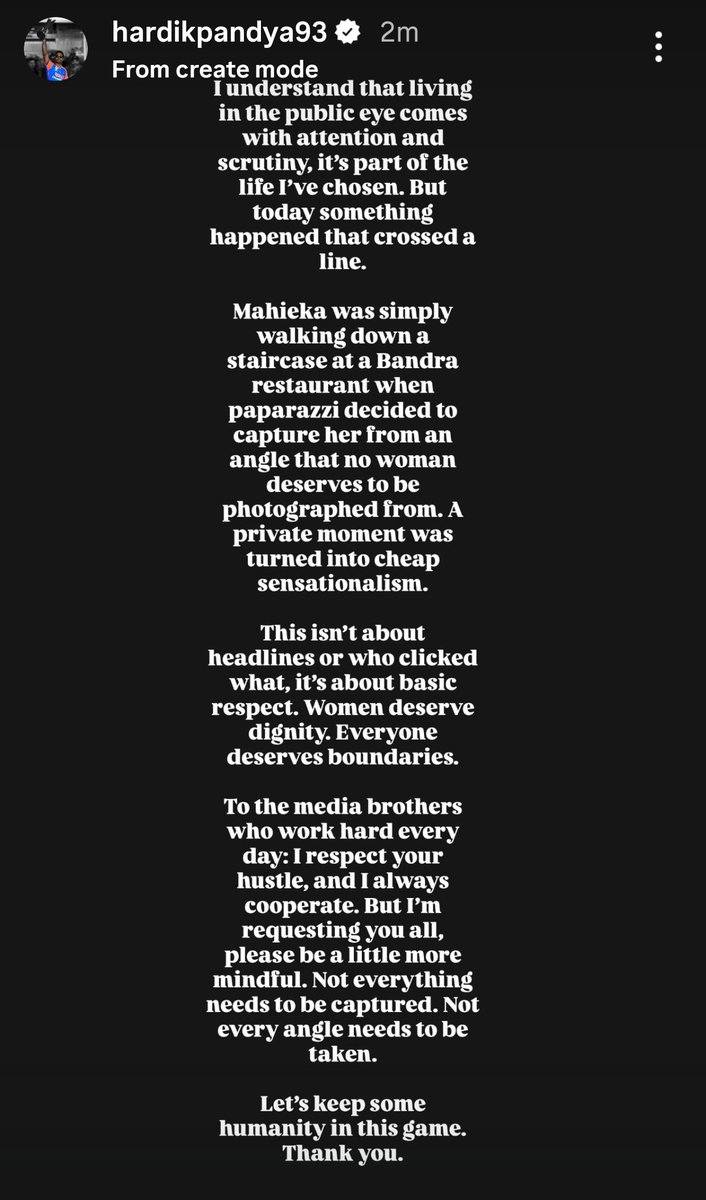
Pandya acknowledged the reality of his life, writing, "I understand that living in the public eye comes with attention and scrutiny; it's part of the life I've chosen."
Fame is Not a Free Pass to Ignore Boundaries
The incident is a stark reminder that the celebrity-paparazzi dynamic in India is reaching a tipping point. While the Indian Constitution recognizes the right to privacy as a fundamental right under Article 21, the legal framework specific to paparazzi culture remains vague. Celebrities like Alia Bhatt, Anushka Sharma, and veteran actor Jaya Bachchan have all, at different times, publicly pushed back against the growing culture of intrusion, particularly concerning their private residences or the privacy of their children.
Hardik's message, however, was directed at the ethical compass of the media professionals themselves.
The Need for Respect in the Pursuit of Clicks
In a world driven by social media engagement, the pressure to produce viral content often overshadows ethical considerations. The battle between the public's insatiable appetite for celebrity content and the celebrity’s right to personal space is constantly being fought on the streets of Mumbai.
Hardik Pandya’s stand is a powerful voice advocating for the principle that "basic respect" must always trump the pursuit of sensational headlines.
Read Also:
Get the latest Bollywood entertainment news, trending celebrity news, latest celebrity news, new movie reviews, latest entertainment news, latest Bollywood news, and Bollywood celebrity fashion & style updates!
HOW DID YOU LIKE THIS ARTICLE? CHOOSE YOUR EMOTICON!


.webp)