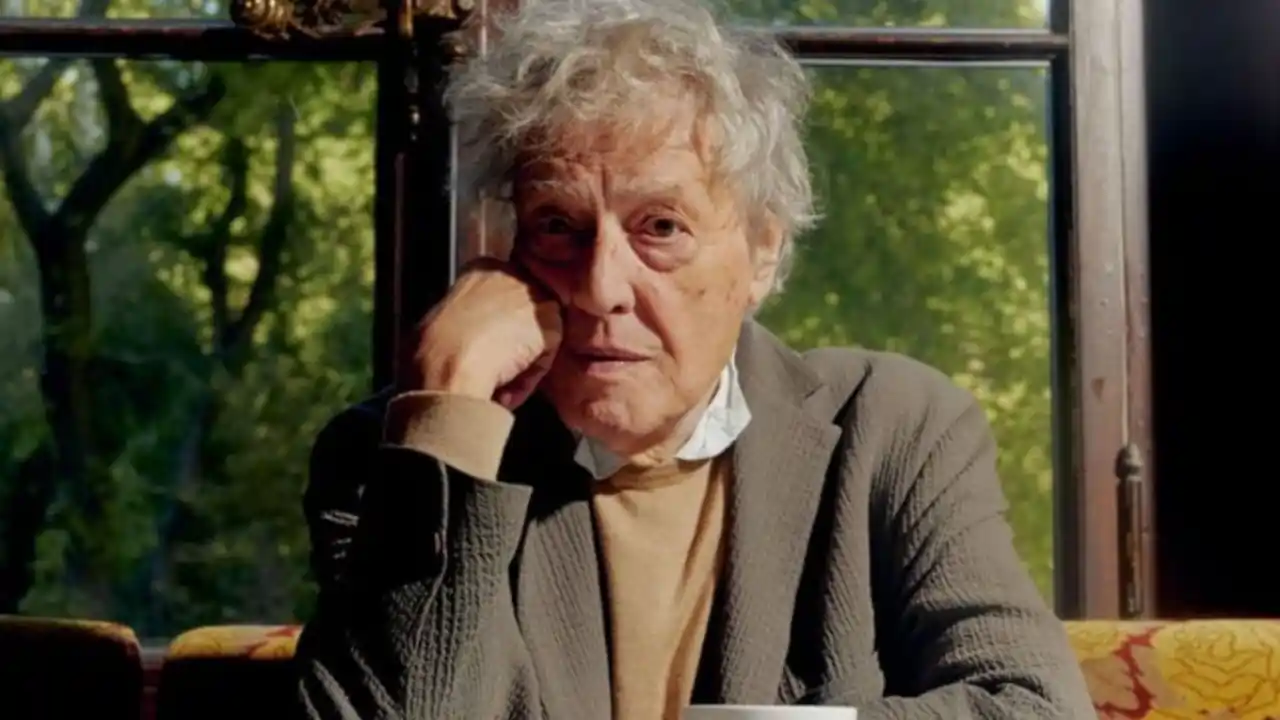
Tom Stoppard: The Playwright Who Made Philosophy Dance on Stage (1937–2025)
3 months ago | 5 Views
Sir Tom Stoppard, one of the most brilliant and beloved playwrights of the modern era, has passed away at the age of 88. With his razor-sharp wit, dazzling wordplay, and fearless curiosity about science, history, and the human condition, Stoppard turned the theatre into a playground for big ideas without ever losing the common touch.
From Refugee Childhood to Theatrical Revolution
Born Tomáš Straussler in Zlín, Czechoslovakia in 1937, Stoppard fled the Nazis with his family, eventually settling in England after a wartime detour through Singapore and India. He never attended university, yet he became one of the most intellectually formidable writers of his generation. Leaving school at 17 to work as a journalist, he taught himself everything from quantum mechanics to moral philosophy; knowledge he later poured into his plays.
The Breakthrough That Changed Theatre Forever
Everything changed in 1966 with Rosencrantz and Guildenstern Are Dead. Taking two minor characters from Hamlet and placing them centre stage, Stoppard created a tragicomedy that asked profound existential questions while juggling probability, fate, and the absurdity of life. Critics hailed it as a masterpiece; audiences loved its verbal fireworks and slapstick humour. Overnight, a 29-year-old unknown became the voice of a new theatrical generation.

Love, Chaos Theory, and Everything In Between
Over the next five decades, Stoppard produced an extraordinary body of work. Travesties (1974) threw Lenin, James Joyce, and Dadaist Tristan Tzara into the same Zurich library. Arcadia (1993) remains one of the few plays to make chaos theory, landscape gardening, and Lord Byron romantically intertwined. The Coast of Utopia (2002), his epic trilogy about 19th-century Russian intellectuals, won multiple awards and proved that serious ideas could fill theatres for nine hours across three nights.
His reach extended beyond the stage. In 1999 he co-wrote the Oscar-winning screenplay for Shakespeare in Love, proving he could deliver crowd-pleasing romance with the same linguistic brilliance he brought to weightier themes.
A Mind That Never Stopped Playing
What made Stoppard unique was his refusal to choose between entertainment and enlightenment. He believed audiences were smarter than they were often given credit for, and he trusted them to laugh at a pun-filled debates about determinism one minute and feel genuine heartache the next. Whether exploring particle physics in Hapgood, the ethics of journalism in Night and Day, or the nature of consciousness in The Hard Problem, he always started from the premise that ideas are exciting, not intimidating.
A Legacy Written in Wit and Wonder
Tom Stoppard’s death marks the end of an era, but his plays will continue to challenge, delight, and surprise new generations. From sixth-form classrooms studying Rosencrantz and Guildenstern to West End and Broadway revivals of Arcadia, his voice remains unmistakably alive. He showed that theatre could be both popular and profound, funny and philosophical, accessible and ambitious.
In an age often suspicious of big questions, Stoppard reminded us that curiosity is a form of love. The curtain may have fallen on his extraordinary life, but the conversation he started will echo through theatres for decades to come.
Get the latest Bollywood entertainment news, trending celebrity news, latest celebrity news, new movie reviews, latest entertainment news, latest Bollywood news, and Bollywood celebrity fashion & style updates!
HOW DID YOU LIKE THIS ARTICLE? CHOOSE YOUR EMOTICON!
# TomStoppard # PhilosophyDance


.webp)