









Maruti Suzuki Shifts Gears: Embraces Rail Transport to Cut Emissions, Boost Green Dispatch
5 months ago | 5 Views
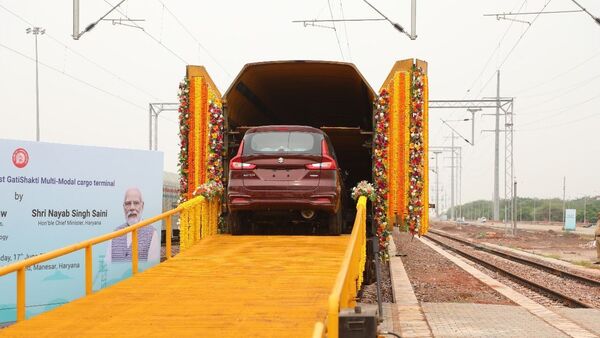
The largest automaker and vehicle exporter in India, Maruti Suzuki India, is discreetly reshaping the landscape of automotive logistics. The firm has progressed beyond symbolic sustainability acts and into large-scale, integrated action with the recent opening of its in-plant railway siding at Manesar.
The siding is not simply another dispatch center; it reflects the development of Maruti's logistics strategy, which is deliberate, systematic, and in line with commercial needs and environmental accountability.
A complete rail facility in Manesar
The Manesar siding, which is now formally the largest in India for any automobile manufacturer, spans 46 acres within the production campus and has a completely electrified 8.2 km corridor. This facility, which was created in collaboration with the Haryana Orbital Rail Corporation Ltd (HORCL), a joint venture that includes Indian Railways, HRIDC, HSIIDC, GMDA, AllCargo Logistics, and Maruti Suzuki itself, is not simply an operational ease. It reflects how infrastructure and production are now coordinated as a single ecosystem.
The siding, which is capable of sending out up to 4.5 lakh cars year, represents a total investment of ₹452 crore, comprising ₹127 crore for internal yard development and ₹325 crore as equity in HORCL. Vehicles go straight from the assembly line to rakes, eliminating intermediate handling, staging, and related hazards.
This project highlights Maruti Suzuki India's dedication to "India's growth, in harmony with the environment" and represents a significant advancement toward the company's goal of cleaner and more efficient logistics, as stated by Hisashi Takeuchi, Managing Director and CEO, during the inauguration.
An uninterrupted transition from line to rake
Rahul Bharti, Executive Officer of Corporate Affairs at Maruti Suzuki India, stated that the Manesar automotive railway siding is a component of a revamped logistics spine. “This is about minimising movement, minimising handling, and maximising predictability. The vehicles are loaded directly onto the train after leaving the assembly line. Not only is it more efficient, but it's also more dependable."
Bharti emphasized that Maruti has been collaborating extensively with Indian Railways to ensure consistency in future rake design, slotting, and scheduling. The firm now runs more than 40 flexi-deck rakes and is working with wagon manufacturers to create new rakes that can fit taller SUVs. This knowledge demonstrates Maruti's progressive grasp of both logistics and automobile trends.
He also highlighted congestion at adjacent stations like Pataudi Road and stated that railway officials are still having talks about addressing throughput as capacity increases.
Maruti now has direct access to 17 hubs and 380 cities since Manesar, and exports through Mundra and Pipavap are being more frequently transported by rail. This network enhances end-to-end visibility while considerably alleviating strain on road transportation.
Ten years of steady progress on rails
Maruti Suzuki's rail-based logistics transition started in 2013, when it became the first automobile manufacturer in India to be granted an Automobile Freight Train Operator (AFTO) licence. Since then, the business has progressively improved its rail dispatch capabilities, growing from its first rake in 2014 to running more than 40 flexi-deck auto-wagon rakes now. More than 25 lakh cars have been transported by Maruti Rail as of June 2025, with a record 5.18 lakh units shifted in FY24–25 alone, representing over 24% of all dispatches.

Read Also: Top 5 Budget-Friendly Litre-Class Cruisers for the Easygoing Rider
Get the latest Bollywood entertainment news, trending celebrity news, latest celebrity news, new movie reviews, latest entertainment news, latest Bollywood news, and Bollywood celebrity fashion & style updates!