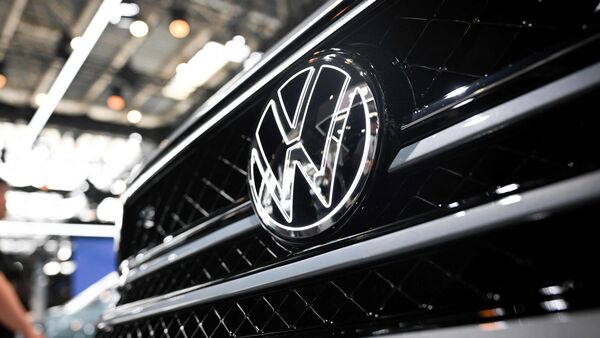










Volkswagen's Profit Challenge: How Tariffs Are Reshaping Global Automotive Economics

Volkswagen's Profit Challenge: How Tariffs Are Reshaping Global Automotive Economics

4 months ago | 5 Views

The global automotive industry, a complex web of supply chains, manufacturing hubs, and international trade agreements, is highly susceptible to external economic pressures. Recent reports indicating a tumble in Volkswagen's profits, primarily attributed to tariffs driving up costs, serve as a stark reminder of this vulnerability. This development is not merely a setback for one of the world's largest automakers; it's a significant indicator of how geopolitical tensions and protectionist trade policies are reshaping the economics of global manufacturing. It underscores the intricate balance between international trade, production efficiency, and consumer pricing, revealing the far-reaching consequences when this equilibrium is disturbed by external levies.

The Ripple Effect of Tariffs: Beyond Borders

Tariffs, essentially taxes imposed on imported goods, are designed to protect domestic industries or address trade imbalances. However, their impact rarely remains confined to the intended targets. For a multinational giant like Volkswagen, with production facilities and sales networks spanning continents, tariffs create a complex web of challenges. Components might be sourced from one country, assembled in another, and sold in a third, making the entire process susceptible to duties at multiple points. If, for instance, tariffs are imposed on steel or aluminum, the cost of raw materials for vehicle production increases. Similarly, duties on imported components or even fully assembled vehicles can directly inflate manufacturing expenses. This leads to a cascading effect, where increased costs at one stage of the supply chain inevitably translate into higher overall production outlays for the company.

Eroding Profit Margins: A Direct Consequence

The most immediate and tangible consequence of rising costs due to tariffs is the erosion of profit margins. Automakers operate on relatively thin margins, especially in competitive markets where price sensitivity is high. Even a slight increase in production costs can significantly impact profitability. Volkswagen, known for its diverse portfolio ranging from mass-market vehicles to luxury brands, relies on economies of scale and efficient global operations to maintain its competitive edge. When tariffs disrupt this efficiency, the company faces a difficult choice: absorb the higher costs, thereby reducing profits, or pass them on to consumers through higher vehicle prices. The latter option risks alienating customers and losing market share, making the former often the more immediate, albeit painful, decision. The reported profit tumble suggests that Volkswagen is currently grappling with the challenge of absorbing these increased expenses to remain competitive in various markets.

Strategic Dilemmas: Pricing, Production, and Localization

The persistent pressure from tariffs forces automakers like Volkswagen to re-evaluate their fundamental business strategies. One critical dilemma is pricing. In markets where tariffs are high, increasing vehicle prices might be unavoidable, but this could make their products less attractive compared to locally produced alternatives or imports from countries not subject to the same duties. This can lead to a decline in sales volume, further impacting profitability.

Volkswagen Expects Solid Profits Despite Europe Tariff Challenges

Another strategic consideration is production relocation. To circumvent tariffs, companies might explore shifting manufacturing facilities to countries where trade barriers are lower or non-existent. However, such large-scale relocations are incredibly complex, costly, and time-consuming, involving significant investments in new infrastructure, supply chain re-establishment, and workforce training. Furthermore, they might not always be feasible due to existing commitments, logistical challenges, or the availability of skilled labor and necessary infrastructure.

Localization of the supply chain also becomes a more attractive option. By sourcing more components and raw materials within the regions where vehicles are sold, companies can reduce their exposure to import tariffs. This, however, requires developing new supplier relationships and ensuring that local suppliers can meet the stringent quality and volume requirements of a global automaker.

The Broader Economic Landscape: Uncertainty and Investment

Volkswagen's profit challenges due to tariffs are symptomatic of a broader trend of increasing economic nationalism and trade protectionism worldwide. This environment of uncertainty makes long-term planning and investment decisions significantly more difficult for global corporations. Companies become hesitant to commit to large-scale projects or expand into new markets if the regulatory and trade landscape is constantly shifting. This can stifle innovation, slow down economic growth, and ultimately impact job creation. For the automotive industry, which is already undergoing a massive transformation towards electric vehicles and autonomous driving, the added burden of trade wars can divert resources and attention away from crucial R&D and future-oriented investments.

In conclusion, the news of Volkswagen's profits tumbling due to tariffs is a powerful illustration of how geopolitical factors directly impinge on corporate performance and global trade. It highlights the intricate interconnectedness of the modern economy and the disruptive potential of protectionist policies. For Volkswagen, navigating this challenging environment will require a delicate balance of strategic pricing, potential supply chain adjustments, and perhaps even advocacy for more stable international trade relations. Ultimately, this situation serves as a critical case study in how tariffs, intended to achieve specific economic objectives, can create widespread financial repercussions across complex global industries.
Read Also: 
Auto Recap July 27: VinFast's India Entry, Mahindra's EV Record, and MG Comet Price Adjustments
Get the latest Bollywood entertainment news, trending celebrity news, latest celebrity news, new movie reviews, latest entertainment news, latest Bollywood news, and Bollywood celebrity fashion & style updates!

HOW DID YOU LIKE THIS ARTICLE? CHOOSE YOUR EMOTICON!
#